
Exploring the Rights and Responsibilities of Women in Islam

Exploring the Rights and Responsibilities of Women in Islam

Delve into the world of women in Islam and explore their rights and responsibilities. This guide provides valuable insights into their roles within the faith.

Women in Islam play important roles and have rights and responsibilities within the faith. This guide offers valuable insights into the various aspects of women's lives in Islam, including their roles in the family, society, and religious practices. It aims to provide a comprehensive understanding of the rights and responsibilities afforded to women in Islam.

Understanding the Concept of Gender Equality in Islam
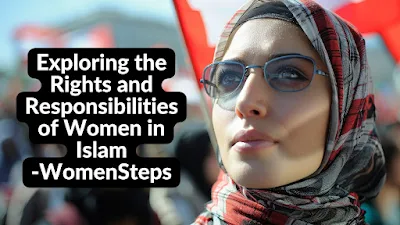
Exploring the Rights and Responsibilities of Women in Islam
Image credit goes to Freepik
Gender equality is a concept that is often misunderstood in Islam. While it is true that men and women have different roles and responsibilities within the faith, this does not mean that one gender is superior to the other. In fact, Islam places a strong emphasis on the equality and dignity of all individuals, regardless of their gender. Both men and women are considered equal in the eyes of Allah and are expected to fulfill their respective roles and responsibilities in a way that is pleasing to Him. It is important to understand that gender equality in Islam does not mean that men and women are identical or that they should be treated exactly the same in all situations. Rather, it means that both genders have equal value and worth and should be given equal opportunities to fulfill their potential and contribute to society.

The Rights of Women in Marriage and Divorce

Exploring the Rights and Responsibilities of Women in Islam
Image credit goes to Freepik
In Islam, marriage is considered a sacred bond between a man and a woman. Both parties have certain rights and responsibilities within this union. Women have the right to choose their own spouse and cannot be forced into a marriage against their will. They also have the right to be treated with kindness, respect, and fairness by their husbands. This includes providing for their financial needs, supporting their emotional well-being, and granting them autonomy in decision-making. In the event of divorce, women have the right to seek dissolution of the marriage if they are unhappy or if their rights are being violated. They are entitled to a fair and just settlement, including financial support and custody of their children. It is important to note that while Islam grants women these rights, cultural practices and interpretations of religious texts may vary, leading to different experiences for women in different communities.

Women's Rights to Education and Employment in Islam

In Islam, women have the right to education and employment. The Prophet Muhammad emphasized the importance of seeking knowledge for both men and women, and many Muslim scholars throughout history have supported women's education. Women are encouraged to pursue education in various fields and to acquire knowledge that will benefit themselves and their communities. Similarly, Islam does not restrict women from working or pursuing careers. Women are allowed to engage in any lawful profession or occupation, as long as it does not conflict with their religious obligations and values. However, it is important to note that cultural practices and societal norms may influence the extent to which women are able to exercise these rights in different communities.

The Role of Women in Islamic Society

Exploring the Rights and Responsibilities of Women in Islam
Image credit goes to Freepik
The role of women in Islamic society is multifaceted and varies across different cultures and communities. In Islam, women are considered equal to men in terms of their spiritual worth and their accountability to God. They have important roles as mothers, daughters, sisters, and wives, and are valued for their contributions to their families and communities. However, it is important to note that interpretations of Islamic teachings and cultural practices can sometimes limit women's opportunities and rights. It is crucial to promote a balanced understanding of women's rights and responsibilities in Islam, one that respects the principles of the faith while also advocating for gender equality and empowerment.

Balancing Rights and Responsibilities: Women's Agency in Islam

Women in Islam have both rights and responsibilities that are outlined in the teachings of the faith. While they are equal to men in terms of their spiritual worth, they also have specific roles and duties within their families and communities. It is important to strike a balance between upholding the principles of Islam and promoting gender equality and empowerment. This means recognizing and challenging any cultural practices or interpretations of Islamic teachings that may limit women's opportunities and rights. By promoting a balanced understanding of women's rights and responsibilities in Islam, we can work towards creating a more inclusive and equitable society for all.

Note- Next Popular Post - Women Leadership , Malala Yousafzai

Comments

Popular posts from this blog

Secularism Explained: Principles, Global Models, and the U.S. Constitution

What does it actually mean to live in a secular society? While the term is often debated in U.S. politics, secularism is fundamentally about the separation of church and state—a principle enshrined in the First Amendment to ensure equality for all. Whether you are navigating debates on public policy or seeking to understand how different nations balance faith and law, understanding the mechanics of secularism is essential. In this article, we break down its historical roots, its global implementations, and its critical role in maintaining a fair and inclusive democracy. What is Secularism? Defining the Pillar of Modern Democracy ​At its core,  secularism  is the principle of seeking to conduct human affairs based on secular, naturalistic considerations, unimpeded by  religious dogma . In a political context, it refers to the  separation of church and state , ensuring that government institutions remain neutral toward all religious beliefs—including the absence of bel...

The Impact of Women in Leadership Roles on Corporate Culture and Performance

In today’s dynamic business environment, the role of women in leadership positions has become a pivotal topic. Companies are increasingly recognizing the value that women bring to the table, not just in terms of diversity but also in enhancing corporate culture and performance. This article explores the significant impact of women in leadership roles and how it shapes the corporate landscape. 1. Enhancing Corporate Culture Women leaders are known for fostering inclusive and collaborative work environments. Their leadership style often emphasizes empathy, communication, and teamwork, which can lead to a more positive and productive corporate culture. Studies have shown that companies with women in leadership positions tend to have higher employee satisfaction and lower turnover rates. According to a study by Catalyst, companies with more women in executive positions have 34% higher total return to shareholders compared to those with fewer women leaders. 2. Driving Business ...

Breaking Barriers: Celebrating the Achievements of the National Organization of Women (NOW)

Breaking Barriers: Celebrating the Achievements of the National Organization of Women (NOW) In a world where gender equality remains an ongoing struggle, there are organizations that have tirelessly fought to break down barriers and champion the rights of women. One such organization is the National Organization for Women (NOW), a powerful force that has been at the forefront of the fight for gender equality for over half a century. Founded in 1966, NOW has been instrumental in bringing about significant societal changes that have empowered women and challenged the status quo. From fighting for reproductive rights to advocating for equal pay and combating gender-based violence, NOW has played a pivotal role in shaping the feminist movement and ensuring that the voices of women are heard and respected. As we celebrate the achievements of NOW , we not only recognize the remarkable progress made but also acknowledge the work that still lies ahead in breaking down the remaining...